

People in Wales asked to be ‘One in a Million’ as family support for organ donation
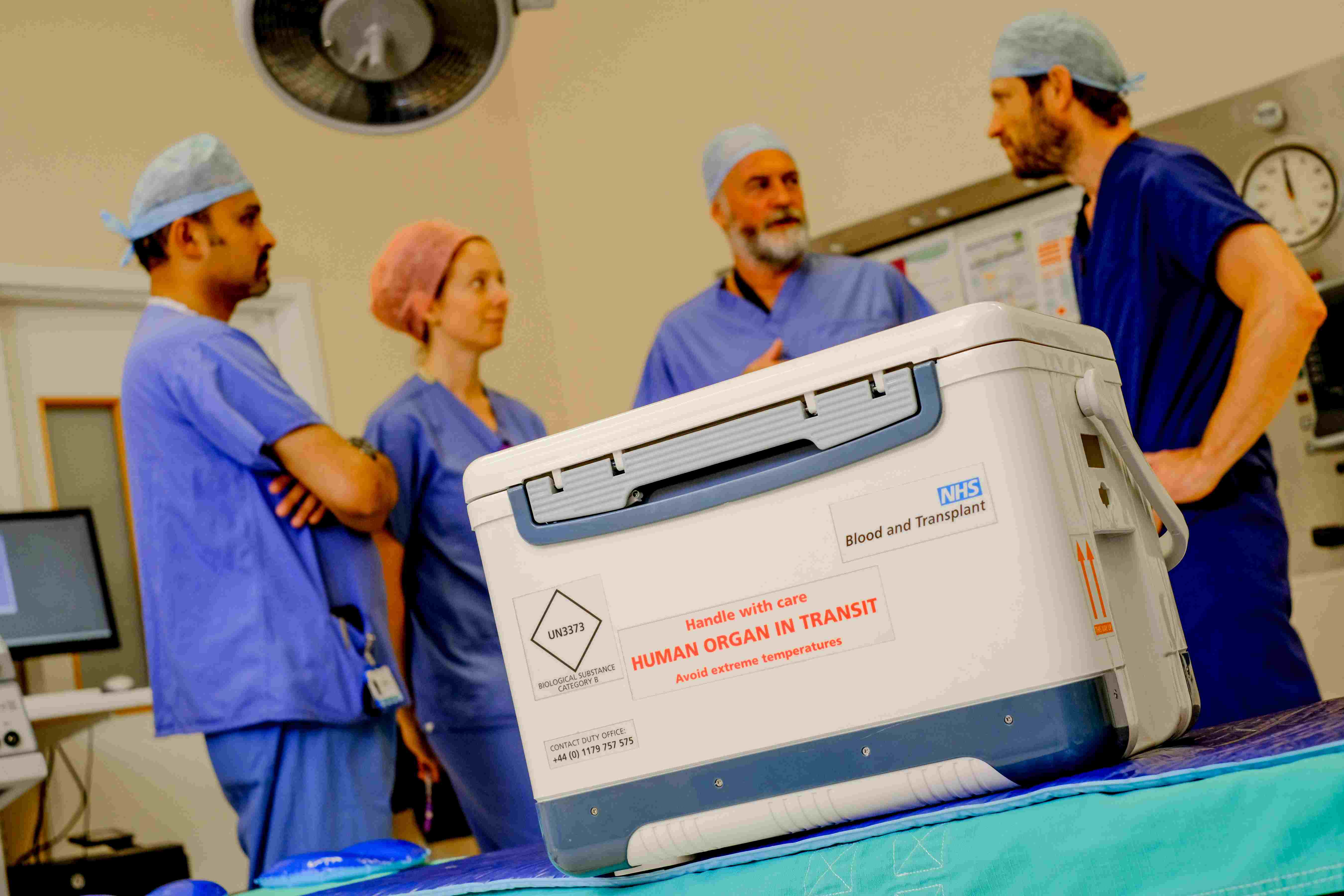
People in Wales asked to be ‘One in a Million’ as family support for organ donation across the UK falls by almost a fifth over the last five years
Could you be one in a million and help save lives?
- Aiming for an extra million adults to register their decision on the NHS Organ Donor Register (ODR) by 2027
- Currently 29 million people have agreed to donate their organs after death
- Evidence shows families support donation going ahead in 90% of cases if their relative is on the ODR. This drops to below 50% when they don’t know if they wanted to be a donor.
- Consent for organ donation has fallen from 69% in 2020/21 to 57% in 2025/26
NHS Blood and Transplant is calling on people in Wales to be ‘One in a Million’ by registering their decision to be an organ donor.
The plan announced today (5 August) is to increase the number of people in the UK on the NHS Organ Donor Register - aiming to increase from 29 million to 30 million people to be registered donors by the end of the year.
The challenge of gaining over a million first time UK registrations by the start of 2027 is designed to tackle the growing dilemma of declining family consent rates and ensure more lifesaving transplants can go ahead.
It comes as new figures published today, show that family consent or authorisation across the UK has dropped from 69% in 2020/21 to just 57% in 2025/26 - a fall of almost a fifth in five years - at the very moment when more people than ever are waiting for a life-saving transplant.
Organ donation is far more likely to proceed when someone has recorded their decision on the NHS Organ Donor Register. Last year, almost 90% of families supported donation when they knew their loved one had made their wishes clear.
Despite strong public support for organ donation in principle, consent at the time of death is falling. Almost 29 million people in the UK have already expressed their decision to be a donor via the NHS Organ Donor Register – with 1.4 million people in Wales already registering their decision to donate their organs after death.
NHS Blood and Transplant’s new ambition signals a clear national call to action: to close the gap between the public’s support for donation and the number of people who formally record their decision, and to ensure that every potential donor has the best chance of saving lives.
Beth Owen, 53, from Tonteg, Pontypridd, knew daughter Menna, 18, wanted to be an organ donor after they had discussed their wishes as a family. Menna died in March last year after a cardiac arrest, caused by an epileptic seizure. She went on to donate her heart and lungs to two different recipients, both in their 20s.
Beth said: "Menna had epilepsy but it was very well controlled – she'd only had three seizures. On the day of her final seizure, Menna had been at work and went for a lie down while I made tea. That was a bit out of the ordinary, but she'd been working long hours, I assumed she was tired. After we ate, she went into the other room to speak to some friends. After about 15 minutes, I went through to ask her to have an early night. She was already in the bathroom and I went straight in. She was in cardiac arrest when I got in there."
The Air Ambulance crew and paramedics took Menna by ambulance to the same hospital where Beth, a Senior Nurse in Neuroscience, works. Beth, husband Malcolm and son Dan, age 23, were told that Menna had a catastrophic brain injury and wasn't likely to survive.
"I brought organ donation up", says Beth. "I knew it was what Menna wanted. We'd had a conversation, as a family, about staying safe, talking about things like alcohol and drugs. It led to a bigger discussion, which included organ donation. Menna said yes straight away, she said she would want to donate everything she could.
"Menna was amazing and it's right that donation is what she wanted – it's the type of person she was, she was kind. She lived her life quietly and was happy. She was never far away from our Dog Ollie. She loved to read, anything relating to crime and psychology and enjoyed trying new things. She did indoor sky diving; we did the North Wales zip wire and she wanted to try hang gliding; I wasn't so keen on that. She took everything in her stride and would not let her epilepsy stop her doing what she wanted to. She was looking forward to starting University, studying criminal psychology.
''We always told Dan and Menna that as long as they have tried their best, that would always be good enough for us. The last thing we could do was our best for Menna, by honouring her wishes – there was no decision for us to make when it came to organ donation, she had already made it. I don't know if we would have been able to make that same decision if she hadn't. When you know what their wishes are, it makes it so much easier and donation became everything to us''.
"I know now that donation gives comfort to families too. Knowing that she has helped others and that we have honoured her wishes, I think she would be proud. We are shattered and we will grieve Menna forever, but donation has given us such comfort. I think some people do not have to live a long life to make a difference. Perhaps Menna's purpose was to make an incredible difference to us every day of her life and to save lives in her death.
“I have heard that, a year on, both recipients are doing incredibly well. That's Menna's legacy."
While there were modest increases in organ donors and transplants across the UK last year, in Wales there was an increase in the number of donors - with 126 people donating their organs compared to 115 the previous year – the number of people in the region receiving transplants fell slightly to 224 from 235 last year. The figures underline a widening gap between the number of people who donate organs after death and those 348 patients who are waiting for a transplant in Wales.
The Organ and Tissue Donation and Transplantation Activity Report, published today, shows that in 2025/26 in the UK:
- 1,428 people donated organs after death, an increase of 2% on last year
- 4,666 patients received an organ transplant, an increase of 2% on last year
- the number of living donors increased by 2% to 1017, accounting for 42% of the total number of organ donors
- The number of corneal transplants increased by 6% offering the gift of sight to thousands of people in the UK
8,296 patients, including 241 children, were on the active UK transplant waiting list as of 31 March 2026 – the highest number on record.
Sadly, every day someone dies waiting for a transplant. Last year 434 patients died waiting (16 in Wales), and a further 899 patients were removed from the transplant list due to deteriorating health. Many of these patients would have died shortly afterwards.
Anthony Clarkson, Director of Organ and Tissue Donation and Transplantation at NHS Blood and Transplant said;
“Family support for organ donation has been in steady decline over the last few years, and we need to reverse that trend. We understand that when families are approached about organ donation, they may be expected to make difficult decisions at an already tragic time. That’s why we are asking people in Wales to be ‘One in a Million’ and drive up the number of people on the NHS Organ Donor Register to 30 million by the start of 2027. It gives your family that certainty that you want donation to go ahead and it’s expected that they honour that decision.
“For many families though, even when their loved one has expressed a wish to donate, they still override that decision for whatever reason, meaning hundreds of potential organ transplant opportunities being lost each year.
“I would urge people who haven’t already done so to express your decision to donate via the Organ Donor Register and for families to remember that decision and honour it should the time come. It’s the final act you can do for them to honour their memory and leave a lasting legacy to be proud of.”
Alongside urging more people to register their decision and speak to their families, the NHS is also working to modernise systems and invest in innovation to help improve outcomes and make more transplants possible.
At the start of the year, a new report was produced which called for a ‘bolder, braver approach to organ donation.’ The Organ Donation Joint Working Group (ODJWG) was put in place in response to the transplant waiting list reaching a record high and nearly 5,000 people dying waiting for a life-saving transplant in the last decade.
Support for organ donation is strong in the UK with almost 29 million people having expressed their wish to donate on the NHS Organ Donor Register.
The ODJWG report sets 3 ambitions:
- Societal action in signing on to the NHS Organ Donor Register and consent matches the high levels of public support for organ donation in principle
- A positive clinical donation culture is created through embedding the Specialist Nurse for Organ Donation within the hospital multidisciplinary team, ensuring families receive the best possible support and that the donor’s best interests remain paramount
- Improve performance monitoring and provide ethical advice on current and emerging organ donation matters